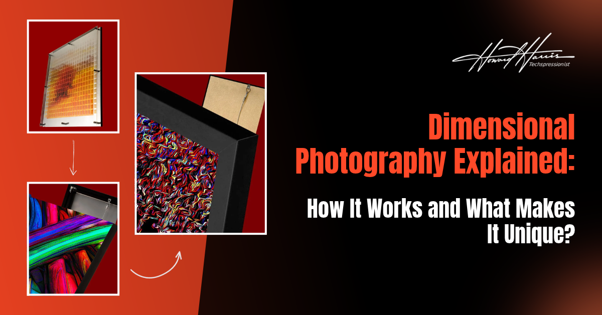
When dimensional photography is explained through a finished piece of artwork, the role of each layer becomes easier to understand. Howard Harris creates this effect by combining a dye-sublimation aluminum base with one printed acrylic overlay, leaving space between the two surfaces. This construction gives selected photographic images a physical depth that goes beyond a traditional flat print.
What Is Dimensional Photography?
To understand dimensional photography explained through layered artwork, look at how separate image surfaces sit at different depths to create a physical sense of dimension.
In Howard Harris’s dimensional pieces, the construction includes:
- An aluminum base carrying the main photographic image.
- One clear acrylic overlay with a separate image printed on its underside.
- Standoffs that hold the acrylic above the aluminum.
- A rear metal frame that supports the aluminum sheet.
The space between the two image layers gives the artwork its dimensional appearance.
How Does Dimensional Photography Work?
The process brings different materials together to create one finished piece. Each part has a specific purpose.
1. The Aluminum Base
The main image is transferred onto a specially coated aluminum surface through dye-sublimation.
Heat allows the dyes to infuse into the coating, creating the image on the metal base.
2. The Printed Acrylic Overlay
A second image is printed on the underside of one clear acrylic sheet.
This sheet sits above the aluminum base. It adds another image layer to the composition.
3. The Space Between the Layers
Standoffs keep the acrylic separated from the aluminum. A metal frame supports the aluminum from behind.
This gap is an important part of dimensional photography explained through Harris’s patented construction. It gives the artwork physical depth rather than presenting both image layers on one flat surface.
What Makes Dimensional Photography Unique?
The main difference comes from the way the artwork is constructed and viewed. In a traditional flat print, the image appears on one surface. In layered photographic artwork, two image-bearing surfaces sit at different depths.
This creates two noticeable effects:
- Changing perspectives: The relationship between the image layers changes as viewers move around the artwork.
- Interaction with light: Light affects how the aluminum image and acrylic overlay appear together.
Some designs also include a subtle grid. It adds visual structure and becomes part of the composition.
What Materials Are Used in Dimensional Photography?
Understanding the materials makes dimensional photography much clearer. Each component contributes to the artwork’s construction and presentation.
| Material | Purpose |
| Coated aluminum | Holds the main photographic image |
| Printed acrylic | Adds a separate image layer |
| Standoffs | Keeps the acrylic above the aluminum |
| Rear metal frame | Supports the aluminum sheet |
| Subtle grid | Adds structure to selected designs |
The materials work together to create a layered presentation. Their arrangement gives the image depth and makes its construction part of the viewing experience.
How Does It Compare With Other Photographic Prints?
Dimensional photography is one of three presentation formats offered in Howard Harris’s photographic artwork collection. Each format has a different construction.
Dimensional Aluminum Artwork
- Combines an aluminum base with one printed acrylic overlay.
- Uses standoffs to separate the two image layers.
- Has a supporting metal frame at the back.
Direct-to-Aluminum Prints
- Display the image directly on aluminum.
- Do not have a separate printed acrylic overlay.
- Include a black aluminum rear frame.
Giclée Archival Paper Prints
- Use acid-free archival paper.
- Include a mounted board and solid wood frame.
- Have clear protective acrylic over the print.
For anyone looking to understand dimensional photography explained in relation to other print formats, the main difference is in how each artwork is constructed. Dimensional pieces use separate image layers, while direct-to-aluminum and Giclée prints have their own materials and presentation methods.
How Is Dimensional Artwork Mounted?
The mounting system supports the artwork on the wall.
- A French cleat is supplied and recommended for dimensional pieces.
- A wire-and-ring system is also supplied for short-term hanging.
Each artwork includes care instructions on its back. Following those instructions keeps handling and maintenance in line with the artist’s guidance.
See Photography From a Different Perspective
Interested in seeing how a photograph can extend beyond a flat surface? Explore Howard Harris’s dimensional artwork to discover how an aluminum base, a printed acrylic overlay, and the space between them create a layered visual experience. Learn more about dimensional photography explained through his distinctive approach to photographic art.
Frequently Asked Questions
1. What is dimensional photography?
It is a way of presenting photographic artwork with separate image layers and physical space between them to create added depth.
2. Does dimensional photography use acrylic?
Howard Harris’s dimensional artwork uses one clear acrylic overlay with an image printed on its underside, positioned above an aluminum base.
3. Is dimensional photography the same as direct-to-aluminum printing?
No. Dimensional artwork has a separate printed acrylic overlay. Direct-to-aluminum prints display the image on aluminum without this extra layer.
4. How is dimensional artwork mounted?
A French cleat is supplied and recommended for dimensional artwork. A wire-and-ring hanging system is also supplied for short-term use.