
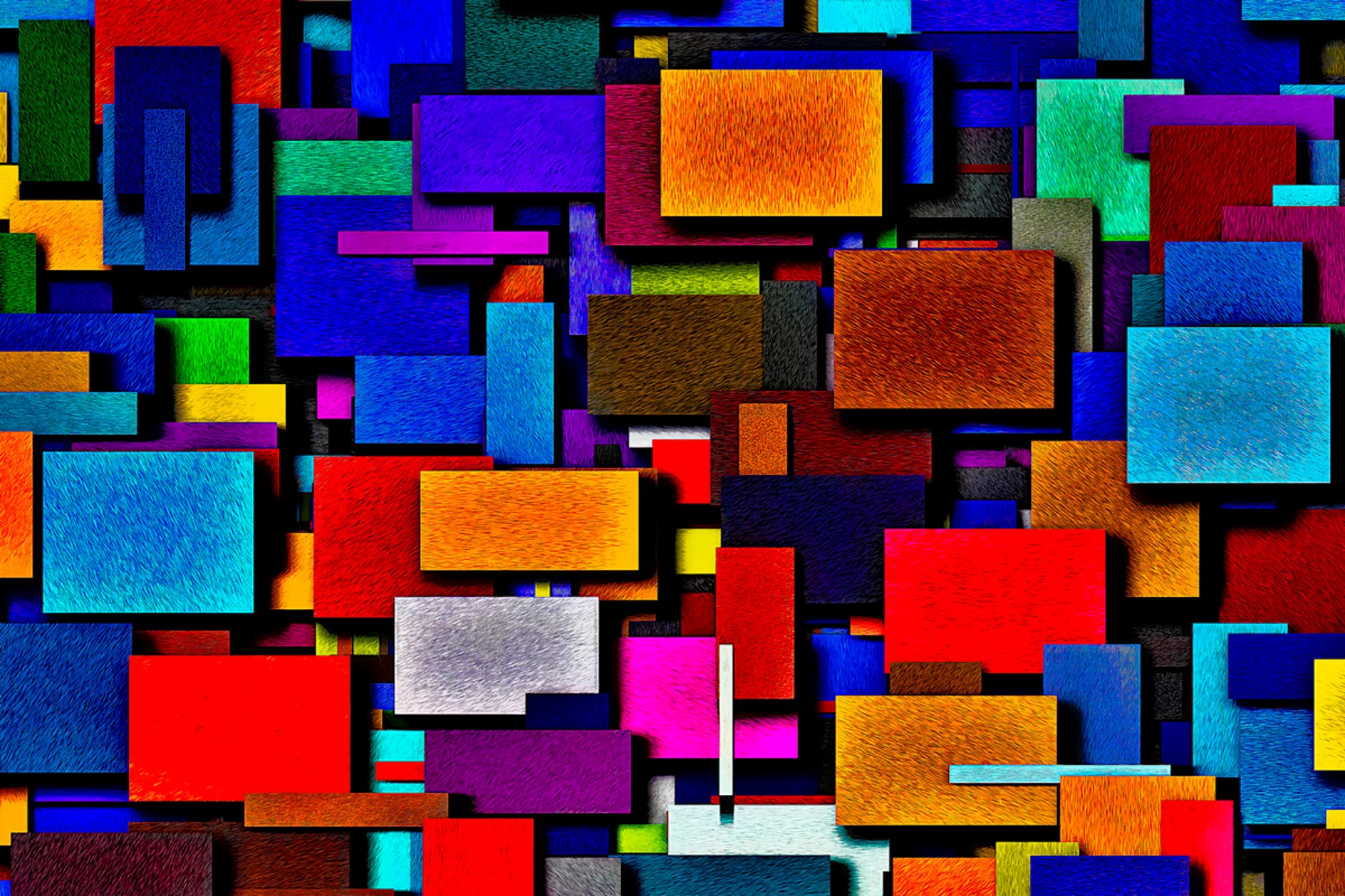
Howard Harris does not treat a photograph as a flat record of what a camera sees. His approach starts with a photographic image and explores what happens when that image is changed, abstracted, and placed into a physical art construction.
This gives abstract photography techniques a different role. They are not only about changing an image. They can also involve design, materials, light, space, and the viewer’s position.
For Harris, visual reality is always changing. Light, color, movement, space, and a person’s own point of view can affect what they see. His dimensional photographic art brings these ideas together in physical form.
Understanding Abstract Photography Techniques
Harris’s approach to abstract photography techniques begins with the photographic image but does not end there.
A single image can become the starting point for a new visual experience. It can be abstracted so that the viewer notices shapes, colors, lines, and relationships rather than only the original subject.
Design also plays a key role. Harris considers visual balance, space, structure, color, and the way different parts of an image relate to each other.
This makes each piece more than a changed photograph. The physical form of the artwork becomes part of how the image is seen.
Abstracting the Photographic Image
The starting point can be one photographic image. Harris can abstract that image to create a new visual structure. In some dimensional pieces, the same photographic image is layered over itself. This changes the way parts of the image relate to one another and creates a sense of depth.
The important point is that the photograph remains the foundation. It is then developed through design and physical construction. This approach to abstract photography techniques lets the image move away from a direct record of a subject and toward a more open visual experience.
Turning Images Into Dimensional Art
Some Harris pieces use a physical construction with a dye-sublimation photographic print onto aluminum and a single printed acrylic layer.
The aluminum forms the base. The image is infused into its coated surface. The acrylic layer is printed and positioned above the aluminum, creating another visual plane.
Light can move through and interact with these surfaces. This can change how the image looks as the viewer moves.
The construction can include:
- A photographic image on the aluminum base
- One printed acrylic layer
- Space between the surfaces
- A supporting structure behind the aluminum
This is an important difference between dimensional photographic art and a standard flat print. The physical construction becomes part of the image experience.
Using Light, Space, and Movement
Light is an active part of Harris’s dimensional art. It can interact with the surfaces and affect how colors, depth, and visual relationships appear. A viewer can also see changes by moving from one position to another. This connects directly to Harris’s view that visual reality is not fixed. What one person sees at one moment can change with the surroundings and viewing position.
The room also becomes part of the experience. Space around the artwork can affect how the piece is viewed. These ideas give abstract photography techniques a physical side. The final result depends not only on the image but also on its materials, light, position, and surroundings.
When the Grid Shapes the Image
A subtle grid is another design element used in some Harris pieces. It is not part of every artwork. When used, the grid can bring more structure to the image. It creates another visual element for the eye to follow and can change the relationship between the image and its surrounding space.
Examples include:
- 283 Midcentury Modern
- 91 Forest Wave
- 114 No Monkeys
- 282 Sunflower
- 121 Cosmic Inflation
- 242 Skylight
Other pieces take a different approach. 269 Columbine Dance, 274 Whooo, and 57 Mind Storm do not use the grid overlay. This shows how Harris changes the construction from one piece to another rather than following one fixed formula.
Photography, Design, and Technology
Harris brings together photography, design, and technology as part of his creative process. His background includes a BFA from Kansas City Art Institute and a Master of Industrial Design from Pratt Institute. He also studied economics and computer science at the University of Missouri and sublimation color research at Rochester Institute of Technology.
This mix of art, design, and technology is important to his approach. It supports a process where the image, physical structure, color, and viewing experience all have a place. His work also relates to the broader idea of Techspressionism. Technology can be used as a creative tool rather than only as a way to reproduce an image.
For Harris, that idea connects with photography, physical construction, visual design, and perception.
Exploring Abstract Works by Howard Harris
Harris’s abstract collection shows how one photographic idea can lead to different visual results. 269 Columbine Dance provides an example without a grid overlay. 283 Midcentury Modern uses a grid as part of its visual structure. Other pieces explore different shapes, colors, and arrangements.
This range is important when looking at abstract photography techniques in Harris’s art. Instead, the choices can change based on the image and the visual effect being explored.
Some works can use dimensional presentation, while others can be offered as Giclée archival prints or other print formats. This gives the individual artwork its own presentation rather than placing every piece into the same format.
Final Thoughts
Howard Harris approaches abstract photography as a way to explore how people see and experience images. A photograph can become the starting point for something physical and dimensional. Through abstraction, design, materials, light, and space, the image can take on a different visual role.
His use of abstract photography techniques is closely tied to this larger idea. The viewer is not only looking at a photograph. The viewer is also responding to depth, light, space, movement, and position.
Explore Abstract Photography Techniques
Explore the abstract collection to see how photographic images can move into dimensional art through abstract photography techniques involving image abstraction, design, materials, light, and space.
Howard Harris Photo brings these ideas together in photographic constructions designed to give the viewer more than a flat image to look at.
FAQs
What are abstract photography techniques in Howard Harris’s work?
They can include abstracting a photographic image, layering an image in physical construction, using design elements, and exploring light, space, color, and viewing angle.
Does every Harris abstract artwork have an acrylic layer?
No. Some pieces use dimensional construction with acrylic, while others do not. Giclée prints are also offered as a separate presentation format.
Why does Harris use a grid in some pieces?
The grid can add structure and another visual plane. It is used selectively, so some pieces include it while others have no grid overlay.
How does light affect the finished artwork?
Light interacts with the physical surfaces and can change how color, depth, and visual relationships appear as the viewer changes position.
