
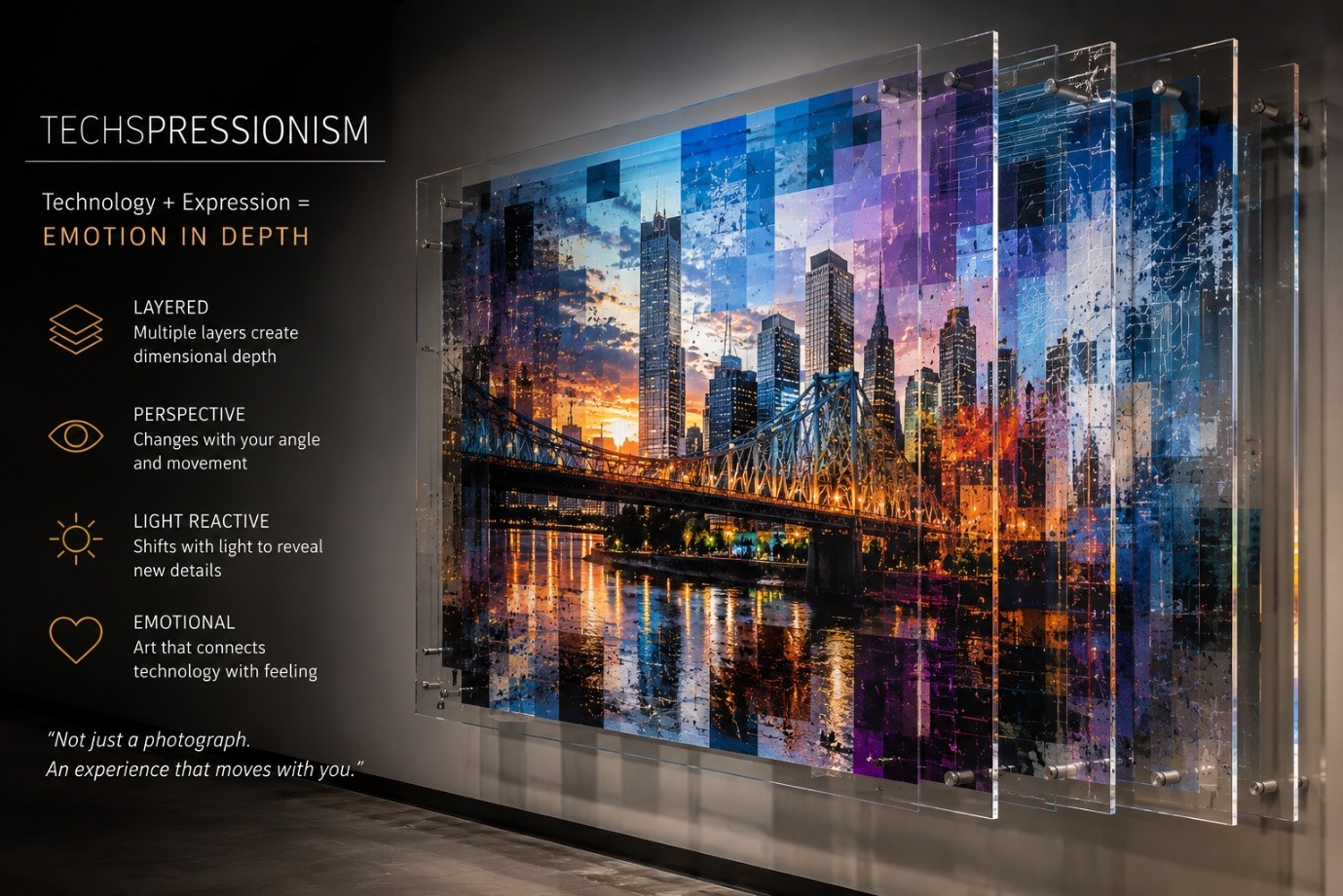
Art keeps changing with time. New ideas keep shaping how we see pictures and photos. One idea many people explore is what is Techspressionism, created by Howard Harris. It is a style where photos are not just flat images. Instead, they are built in layers, so they feel emotional, dimensional, and almost alive. When you look at them, the view can feel slightly different depending on where you stand or how you move.
Understanding What Techspressionism Means in Modern Art
Techspressionism is a simple idea at heart. It means using technology to show human emotions. Instead of only taking a photo and printing it on paper, the image is built specially. It has layers, depth, and structure.
So when you look at it, it does not feel like a normal photo. It feels more like something real in space. This is where Techspressionism becomes important to understand. It is not just a style. It is a new way of thinking about images.
The Origin of Techspressionism and Howard Harris’s Vision
Howard Harris created this idea because he wanted photos to feel more alive. He did not want images to stay flat and still.
His goal was simple:
- Make photos feel emotional
- Add depth to images
- Use technology in a creative way
So he built a method where digital images are turned into physical art pieces. These pieces are layered and can change slightly when you move around them.
How Techspressionism Combines Technology and Emotional Expression
This art style mixes computers and feelings together. First, an image is created using digital tools. Then it is printed on strong materials like aluminum. After that, it is layered with other parts to give it depth. So instead of one flat photo, you get something that feels 3D and alive.
Quick FAQ
Why does Techspressionism look different from normal photos?
Because it is not flat. It has layers, so light and angle change how it looks. This makes the image feel like it is moving slightly when you walk past it.
Key Characteristics That Define Techspressionist Art
This art style has a few clear features:
- Images are built in layers
- The artwork changes with light
- Viewers see different versions from different angles
Because of this, the artwork never feels the same twice. It feels new every time you look at it.
The Role of Digital Tools in Shaping Techspressionism
Digital tools are the starting point of this process. But they are only the beginning. The image is first made on a computer. Then it is printed onto strong materials like aluminum. After that, multiple printed pieces are stacked or layered together.
| Step | What Happens | Result |
|---|---|---|
| 1 | Image is created digitally | Basic design |
| 2 | Printed on aluminum | Physical surface |
| 3 | Layers are added | Depth is created |
| 4 | Final structure is built | 3D artwork |
This is how a simple image becomes something much more powerful.
Techspressionism vs Traditional Photography
Normal photography is flat. You look at it, and it stays the same. But Techspressionism is different. It changes depending on:
- Where you stand
- How light falls on it
- How you move around it
So instead of one fixed image, you get many small changes in one artwork.
Why Techspressionism Is Becoming Important Today
In today’s world, we see many digital images every day. Most of them feel flat or similar. Techspressionism stands out because it feels real and physical. It mixes digital creation with real-world structure. This makes people stop and look again. It also connects emotion with technology in a simple way.
How Artists Create Techspressionist Works in Practice
The process is careful but easy to understand: First, an artist creates or selects a photo. Then it is printed on aluminum sheets. After that, more layers are added using acrylic or similar materials. Finally, everything is put together into one structure.
Quick FAQ
What makes Techspressionist art feel alive?
It is the way light and layers work together. When you move, the image changes slightly. This makes it feel like the picture is responding to you.
Impact of Techspressionism on Modern Creative Work
This style is changing how people think about photography and art. It shows that images do not have to be flat or simple. It also inspires artists to mix digital tools with real materials. This creates new types of visual experiences that feel more engaging.
Challenges and Criticism Around the Movement
Some people feel this style is complex. Others think it is different from traditional photography and takes time to understand. But supporters believe this is what makes it special. It is not just about looking at a photo. It is about experiencing it.
Future of Techspressionism in Digital Art
As technology improves, this style may grow even more. New tools can make layering easier and more detailed. It may also connect with future digital systems, but the core idea will stay the same. That idea is simple: use technology to express emotion in a physical way.
Quick FAQ
Is Techspressionism digital or physical art?
It starts as digital art but becomes physical when printed and layered. The final work is something you can see in real space, not just on a screen.
Understanding Techspressionism in Simple Words
Techspressionism is a way of making photos that feel alive. Howard Harris created it to bring emotion, depth, and movement into photography. It uses technology, but the goal is not technical. The goal is feeling. Every artwork changes a little when you move around it. That is what makes it special and different from normal photography.
Exploring Techspressionism in Depth
To really understand what Techspressionism is, you need to see it in action, not just read about it. This movement changes how an artwork looks based on light, angle, and movement, so every view feels a bit different.
At Harris Photography, Techspressionism is shown through layered photographic works built with digital creation and physical materials like aluminum and acrylic. These pieces are designed to hold emotion inside structure, not just in the image.
Quick FAQ
What is the main idea behind Techspressionism?
The main idea is to use technology not just to create images, but to express emotion through layered, changing visual experiences that react to light and movement.