
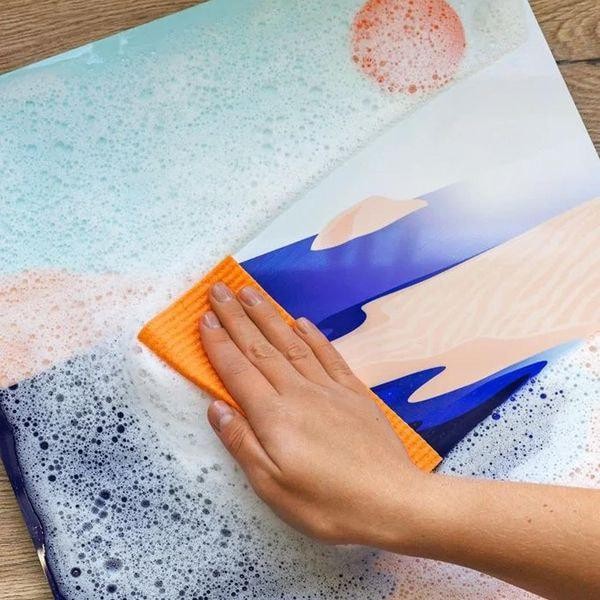
Knowing how to care for aluminum art prints starts with understanding how the artwork is made. At Howard Harris Photo, dye-sublimation photographic prints are created by infusing the image into the aluminum coating. Selected pieces also feature one printed acrylic layer suspended above the aluminum base.
This construction affects cleaning, handling, mounting, light exposure, and display. It also means the care approach can differ from that used for a traditional paper print.
Understand the Aluminum Print Construction
The aluminum presentation begins with a dye-sublimation print. The image is infused into the aluminum coating rather than printed onto paper. A protective polymer coating gives the surface water resistance and scratch resistance. It also supports the strong color and vivid look of the image.
Some Howard Harris Photo pieces include an acrylic overlay as part of their design. The printed image sits on the acrylic layer above the aluminum base, giving the piece its dimensional look. Knowing this construction is important when learning how to care for aluminum art prints.
Know Which Presentation You Have
Howard Harris Photo offers two main aluminum presentations:
- With an acrylic overlay: A printed acrylic layer is suspended above the dye-sublimation aluminum base. The space between the two surfaces creates a dimensional look.
- Without an acrylic overlay: The image is printed directly onto dye-sublimation aluminum. A 3/4-inch black aluminum frame is attached to the back.
Fine Art Sublimation Prints are available in aluminum presentations with or without an acrylic overlay. Giclée Archival Prints use high-quality archival paper with clear acrylic for protection. The right care approach therefore follows the presentation and materials used for the artwork.
Protect the Aluminum Surface
The aluminum surface has a protective polymer coating that resists water and scratches. Even so, it still needs careful handling. When considering care for aluminum art prints, avoid rough contact or anything that could mark or damage the finished surface.
Clean the Artwork Carefully
Cleaning is one area where the exact artwork construction matters. Do not assume that a household glass cleaner, spray, paper towel, or other cleaning product is right for every piece. The care instructions supplied with the artwork should guide cleaning.
This matters even more with acrylic-overlay pieces because the acrylic carries part of the image rather than serving only as a protective cover. Knowing how to care for aluminum art prints also means following the care instructions provided with the piece instead of using a general cleaning method.
Consider Light and UV Exposure
Light plays an important role in the way these photographic constructions are seen. Moving around the piece or changing the surrounding light can change the visual effect.
At the same time, strong UV exposure can affect photographic dyes over long periods. Dye-sublimation aluminum is very durable and can be more fade-resistant than many other print methods, but it is not immune to fading.
For display:
- Avoid treating strong, direct sunlight as harmless.
- Give the artwork enough open space for viewers to see it from different angles.
- Consider how room light interacts with the image and acrylic layer.
Handle Acrylic Overlay Pieces Properly
Acrylic-overlay artwork needs extra care because the acrylic adds weight to the finished piece. The acrylic is held above the aluminum with standoffs, while a traditional metal frame on the back provides added stability.
When moving the piece, support the artwork as a whole rather than treating the acrylic as a separate cover. This is one of the key things to keep in mind when learning how to care for aluminum art prints with an acrylic overlay.
Use the Right Mounting Method
Mounting matters because these artworks can be heavy, especially with an acrylic overlay. For acrylic-overlay pieces, we supply and recommend a French cleat. A wire-and-ring system is also supplied, but it is intended as a short-term option because of the artwork’s weight.
For aluminum pieces without an overlay, a wire-and-ring system is supplied.
| Presentation | Construction | Mounting |
| Aluminum with acrylic overlay | Dye-sublimation aluminum + one printed acrylic layer | French cleat recommended |
| Aluminum without overlay | Image printed directly onto aluminum | Wire-and-ring supplied |
Keep Weight in Mind
Aluminum itself can be relatively light, but the acrylic used in some Howard Harris Photo pieces adds substantial weight. This matters when moving, installing, or remounting a piece. Larger artwork needs suitable wall support. Do not choose a mounting method based only on the aluminum base. Consider the complete finished construction.
Protect the Artwork During Handling
The best approach to caring for aluminum art prints is to consider the complete piece, not only its front surface.
Before moving or installing it, consider:
- Whether it has an acrylic overlay.
- The size and weight of the finished artwork.
- The mounting system attached to the back.
- The care instructions supplied with the piece.
This is especially useful for larger dimensional artwork.
Preserve the Artwork’s Visual Effect
The construction is part of the visual experience. On acrylic-overlay pieces, the aluminum base, printed acrylic layer, light, and viewing angle work together to create changing visual effects.
Give the artwork enough surrounding space so viewers can move and see these effects. Avoid placing objects directly in front of or too close to the artwork. Good care therefore protects more than the surface. It also preserves the way the photographic construction is meant to be seen.
Caring for Your Aluminum Art Prints
If you are learning how to care for aluminum art prints, begin with the specific presentation you own. Check whether it has an acrylic overlay, use the recommended mounting system, avoid harsh UV exposure, and follow the care instructions supplied with the artwork.
For questions about a specific piece, Howard Harris Photo can provide guidance based on its construction and presentation.
FAQs
Can aluminum art prints get wet?
The protective polymer coating provides water resistance, but the artwork is not waterproof. Avoid prolonged moisture exposure and treat the piece as finished photographic artwork.
Can sunlight fade dye-sublimation aluminum prints?
Yes. Strong sunlight and harsh UV exposure can cause fading over long periods. Displaying artwork away from strong direct sunlight can reduce this exposure.
Are acrylic-overlay pieces heavier?
Yes. The acrylic layer adds weight to the finished piece. This is why a French cleat is recommended for acrylic-overlay artwork rather than relying on wire alone.
How should I clean an aluminum art print?
Follow the care instructions supplied with the specific artwork. Do not assume that household cleaners, sprays, or cleaning tools are suitable for every aluminum or acrylic presentation.
