
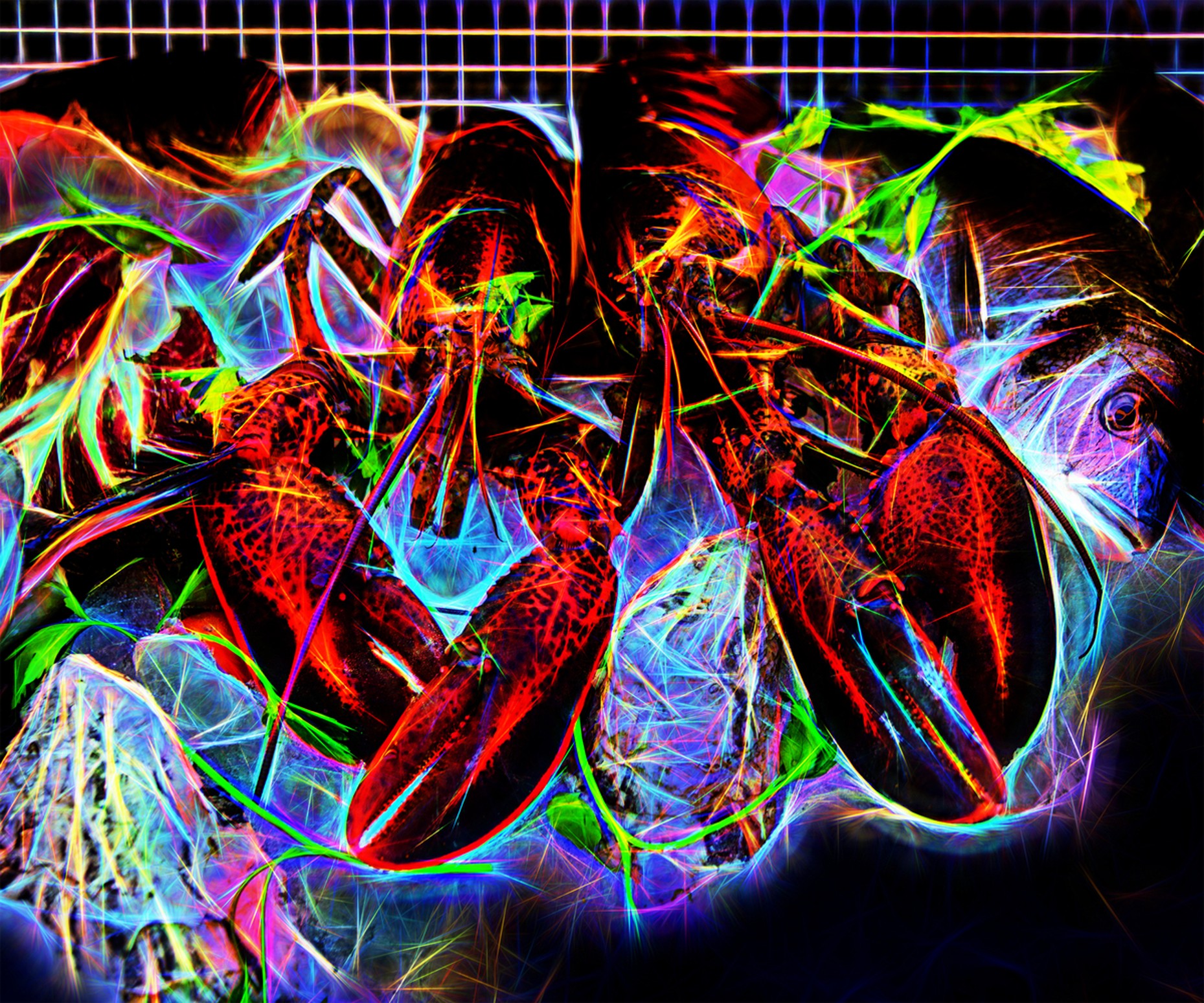
Wildlife art can show an animal in a way that feels fresh and unexpected. Howard Harris takes this approach through photography, design, technology, and visual perception. His animal photography art prints include different subjects, print types, sizes, and visual treatments, giving each piece its own character.
A Different Approach to Animal Photography
Each animal artwork by Howard Harris has its own visual character. The Animals collection features hawks, snakes, squirrels, lobsters, fish, and other subjects, with different design and presentation choices for individual works.
For example, 10 Hawk Eye, 56 Snake, and 62 Maasai Gold use a grid. Other works, including 55 Hoo Are You, 50 The Kerm Eye, and 99 Squirrel Watch, do not.
This difference is a key part of the collection. The artwork is not built from one fixed formula.
For collectors looking at animal photography art prints, this means the visual style of each piece matters. The image, grid treatment, print type, size, and physical presentation can all change the finished result.
From Animal Image to Fine Art
Photography is the starting point, but selected works go further. For applicable dimensional pieces, one photographic image can be abstracted and layered over itself. Clear acrylic becomes part of the physical construction, while a subtle grid can add another visual element.
The process can create a sense of depth and movement. It also connects the image with the space around it.
The main elements include:
- A photographic image
- Clear acrylic
- Dye Sublimation Aluminum
- A grid in selected works
This is why selected animal photography art prints are better understood as physical photographic artwork rather than ordinary flat prints.
Exploring Animals Through Visual Perception
Harris’s work focuses on how people see. His artistic approach brings together four key parts:
- Light
- Color
- Movement
- Space
These elements can change how an image feels. An animal can look different when its surrounding colors, lines, light, and depth change.
This idea also connects with Harris’s exploration of Techspressionism. Technology is not used only as a production tool. It becomes part of the artistic expression.
For animal photography art prints, this creates a different way to experience familiar wildlife subjects.
When Light and Viewing Angle Matter
Light and viewing position are especially important in selected dimensional pieces. The aluminum presentation with an acrylic overlay uses a Dye Sublimation Aluminum base with a suspended acrylic top image. The physical separation creates depth between the surfaces.
As the viewer moves, the relationship between light and the image can change. This gives the artwork a visual quality that a flat print does not provide. The effect is part of the finished design. It is not added only for decoration.
Grid and No-Grid Animal Artworks
The Animals collection includes both grid and no-grid pieces.
| Grid treatment | Named works |
| Grid | 10 Hawk Eye, 56 Snake, 62 Maasai Gold |
| No grid | 55 Hoo are You, 50 The Kerm Eye, 99 Squirrel Watch, 179 Lobsters, 89 Holey Roller, 293 Fish Heads |
This distinction is important when choosing animal photography art prints. A collector can look at the individual artwork and choose a piece based on its own visual style rather than assuming the whole collection follows one process.
Choosing Animal Photography Art Prints
The collection offers several ways to choose a finished piece. Size is one part of that choice.
Standard sizes include:
- 16 × 20 inches
- 24 × 36 inches
- 30 × 36 inches
- 30 × 40 inches
- 36 × 48 inches
- 40 × 60 inches
Other sizes can be requested.
The print type also changes the physical presentation. A collector choosing animal photography art prints can select between Fine Art Sublimation Print and Giclée Archival Print for the named works.
Available Print Types and Sizes
Fine Art Sublimation Print uses Dye Sublimation Aluminum. Selected works can include the dimensional acrylic overlay. Another aluminum presentation places the image directly onto the aluminum without the overlay.
The Giclée option is different. It uses archival-grade acid-free paper, a solid wood frame, mounted board, clear acrylic for image protection, a Kraft paper dust cover, and hanging wire.
The acrylic in the Giclée presentation serves as protection. It is not the same as the acrylic overlay used as part of selected dimensional aluminum artwork.
For larger aluminum and acrylic pieces, a French cleat is recommended for stable wall mounting.
Animal Works Across the Collection
The named Animals works include:
- 55 Hoo are You
- 50 The Kerm Eye
- 99 Squirrel Watch
- 10 Hawk Eye
- 56 Snake
- 179 Lobsters
- 89 Holey Roller
- 62 Maasai Gold
- 293 Fish Heads
The collection also includes 47 additional items beyond these nine named works. Animal subjects appear in other parts of Harris’s artistic practice too. Animal-related work includes cheetahs, eagles, and monkeys. 200 Cheetah(5) and 262 Monkey(2) appear in the Artist Space Animals gallery, while 290 Vervet MaMa Baby Monkey appears in an ArtTour Emerald Award gallery.
The Artistic Background Behind the Work
Harris brings more than 35 years of design and technology experience to his art. His background includes a Bachelor of Fine Arts from the Kansas City Art Institute and a Master of Industrial Design from Pratt Institute. He also studied economics and computer science and completed studies in Sublimation Color Research at the Rochester Institute of Technology.
His dimensional artwork process is covered by U.S. Patent No. 9,753,295, titled “Apparatus and Method of Manufacture for a Layered Artwork.” The patent was granted in 2017. This background connects directly with the way his photographic artwork combines image, material, design, and technology.
Why the Finished Artwork Is More Than a Photograph
The finished piece is shaped by more than the original animal image. Selected works can bring together photography, aluminum, acrylic, color, light, space, and viewing angle. Other pieces use a framed Giclée presentation without the dimensional acrylic construction.
That difference gives collectors several ways to experience nature through art. For anyone considering animal photography art prints, the collection offers more than one visual path. A collector can choose a work with a grid, a work without one, a dimensional aluminum presentation, or a framed archival paper presentation.
Bring Wildlife Into Your Space Through Art
Find an animal artwork that fits your space, preferred size, and presentation style. Howard Harris Photo offers direct purchase, quote requests, and custom-size requests for selected pieces.
Frequently Asked Questions
What animals are featured in the collection?
The named works include hawks, snakes, squirrels, lobsters, fish, and other wildlife. Related animal works also feature cheetahs, eagles, and monkeys.
Do all animal artworks use a grid?
No. 10 Hawk Eye, 56 Snake, and 62 Maasai Gold use grids. Several other named works have no grid, including 55 Hoo are You.
Are all animal artworks dimensional?
No. Selected works use dimensional acrylic construction. Giclée prints use framed archival paper and protective clear acrylic without that dimensional construction.
What sizes are available for animal artworks?
Standard sizes range from 16 × 20 inches to 40 × 60 inches. Other sizes can be requested for selected works.
