
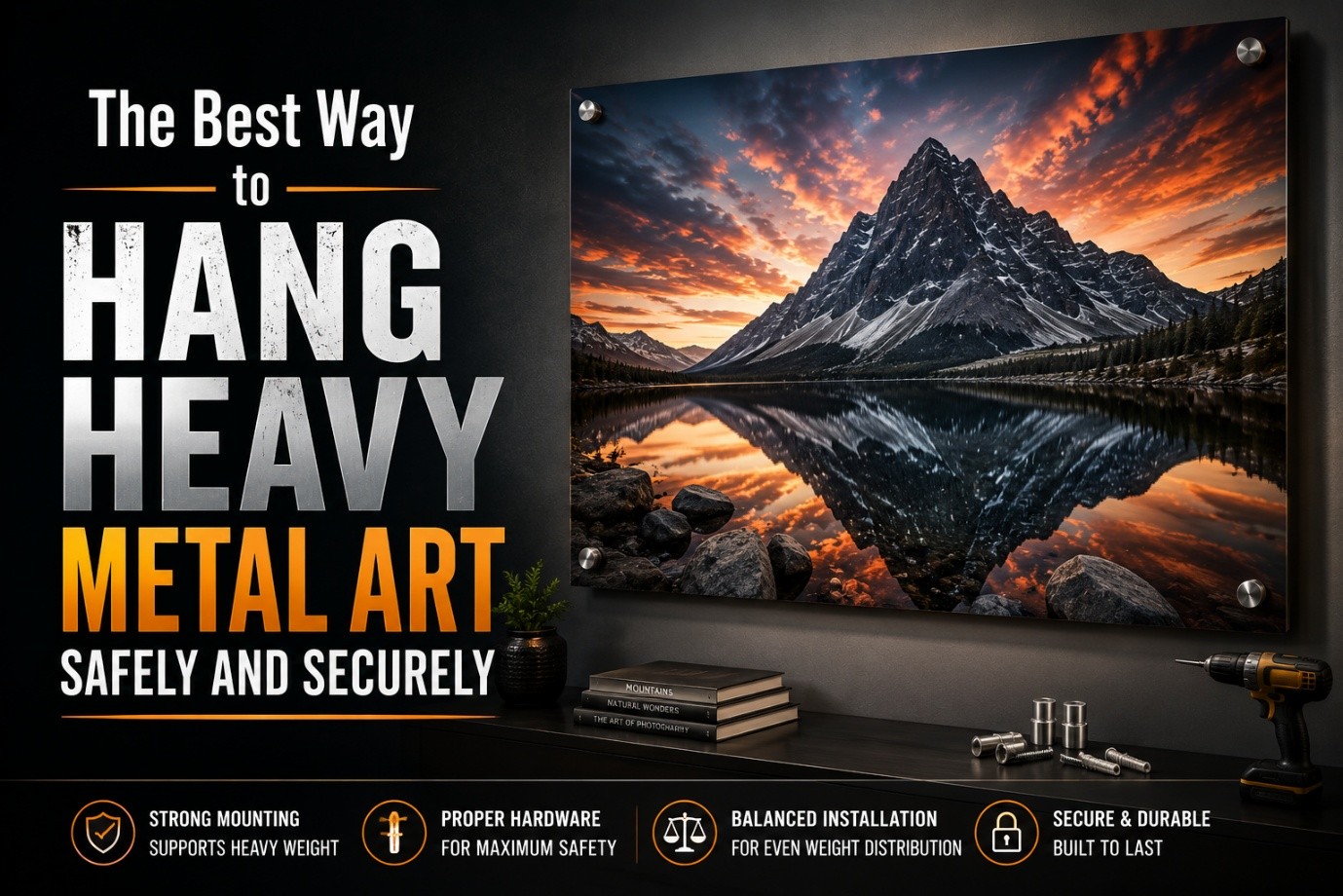
Heavy metal artwork brings a bold, modern feel to any space. It adds depth, shine, and strong visual presence that instantly draws attention. But installation is where things often go wrong. A poor setup can damage both the artwork and the wall. That is why knowing the best way to hang heavy metal art is so important before picking up any tools.
Unlike lightweight frames, metal pieces carry real weight and pressure. They need stable support, proper anchors, and careful planning. Once installed correctly, they stay secure for years without shifting or falling.
Understanding the Challenges of Heavy Metal Art Installation
Metal art is not just decoration. It is weight concentrated in a small area. That creates pressure points on the wall.
There are three main challenges:
- High weight load on a single mount point
- Risk of wall cracking or anchor pull-out
- Difficulty in perfect alignment due to stiffness
Another factor is surface type. Drywall, brick, and concrete all behave differently. So, installation cannot be one-size-fits-all. A careful approach always gives better long-term results.
Why Proper Hanging Methods Matter for Safety and Wall Protection
Poor installation does not just risk the artwork. It can also damage the wall underneath. That leads to expensive repairs and unsafe conditions.
Using the best way to hang heavy metal art ensures:
- Even weight distribution across anchors
- Reduced stress on wall surfaces
- Stable positioning over time
Think of it like hanging a heavy mirror. One weak point can cause failure. Strong support keeps everything balanced and secure.
Choosing the Right Wall Type for Heavy Metal Art
Not all walls are built the same. Some can handle weight easily, while others need reinforcement.
Wall types:
- Concrete walls (strongest support)
- Brick walls (very stable with proper anchors)
- Drywall (needs studs or special anchors)
Drywall is the most common but also the weakest. Finding studs behind it makes a big difference in safety.
Quick FAQ
Can heavy metal art be hung on drywall?
Yes, but only when wall studs or high-quality anchors are used. Drywall alone cannot support heavy loads safely. Proper support distribution is essential to prevent sagging or sudden wall damage over time.
Essential Tools and Hardware Needed for Secure Installation
Good tools make installation smoother and safer. Using random hardware often leads to instability.
Basic tools include:
- Drill with proper drill bits
- Wall anchors or expansion bolts
- Level tool for alignment
- Measuring tape
Hardware should always match weight requirements. Cheap fittings often fail under pressure. The best way to hang heavy metal art always starts with correct tools, not guesswork.
Planning Placement and Alignment Before Installation
Before drilling anything, planning is key. Once holes are made, adjustments become harder.
Start by:
- Measuring wall space accurately
- Marking center points
- Checking eye-level height
- Testing visual balance
Even small misalignment becomes visible once the artwork is mounted. Taking time here avoids frustration later.
Best Anchoring Methods for Different Wall Surfaces
Different walls require different support systems. One anchor type does not fit all situations.
Common methods:
- Drywall: toggle bolts or heavy-duty anchors
- Brick: masonry screws with plugs
- Concrete: expansion anchors or sleeve anchors
Each method spreads weight differently. The goal is to avoid pressure on one small point.
| Wall Type | Best Anchor Type | Load Strength | Risk Level |
|---|---|---|---|
| Drywall | Toggle bolts | Medium (with studs) | Moderate |
| Brick | Masonry anchors | High | Low |
| Concrete | Expansion anchors | Very high | Very low |
This is where proper selection becomes critical for long-term safety.
Quick FAQ
What anchor is safest for heavy metal art?
Expansion anchors in concrete and masonry anchors in brick provide the strongest hold. For drywall, using studs or toggle bolts ensures better weight support and reduces risk of wall damage or loosening over time.
Common Mistakes to Avoid When Hanging Heavy Metal Art
Many installation problems come from small mistakes.
Avoid:
- Using nails instead of anchors
- Ignoring wall structure
- Skipping measurement steps
- Over-tightening screws
Another common issue is rushing alignment. Even strong mounts fail visually if placement looks uneven. The best way to hang heavy metal art always involves patience and proper setup, not speed.
Professional Installation vs DIY Approach
Both methods have value, but the choice depends on experience and artwork size.
DIY works when:
- Artwork is medium weight
- Wall type is known
- Tools are available
Professional installation is better when:
- Art is very heavy
- Wall condition is unknown
- Precision alignment is required
Professionals also understand load distribution better, which reduces risk of future issues.
Quick FAQ
Is professional installation necessary for metal art?
Not always. Smaller pieces can be installed safely with proper tools. However, large or heavy artworks benefit from professional handling because experts ensure secure anchoring, correct alignment, and long-term structural safety.
Maintenance and Long-Term Safety Checks
Installation is not the final step. Over time, walls and anchors can shift slightly.
Routine checks include:
- Tightening loose screws
- Inspecting wall cracks
- Checking alignment stability
Dust can also build up around mounts, so light cleaning helps maintain both appearance and safety. The best way to hang heavy metal art includes long-term monitoring, not just installation.
Secure Your Metal Art with Expert Help Today
Heavy metal art deserves strong and reliable support. When installed correctly, it becomes a permanent visual feature that enhances any space without risk or worry.
For those looking for precision handling and professional finishing, Howard Harris Photo offers installation insight that matches the same attention to detail found in their visual artwork.
Choosing the best way to hang heavy metal art ensures your piece stays stable, aligned, and visually striking for years without compromise.