
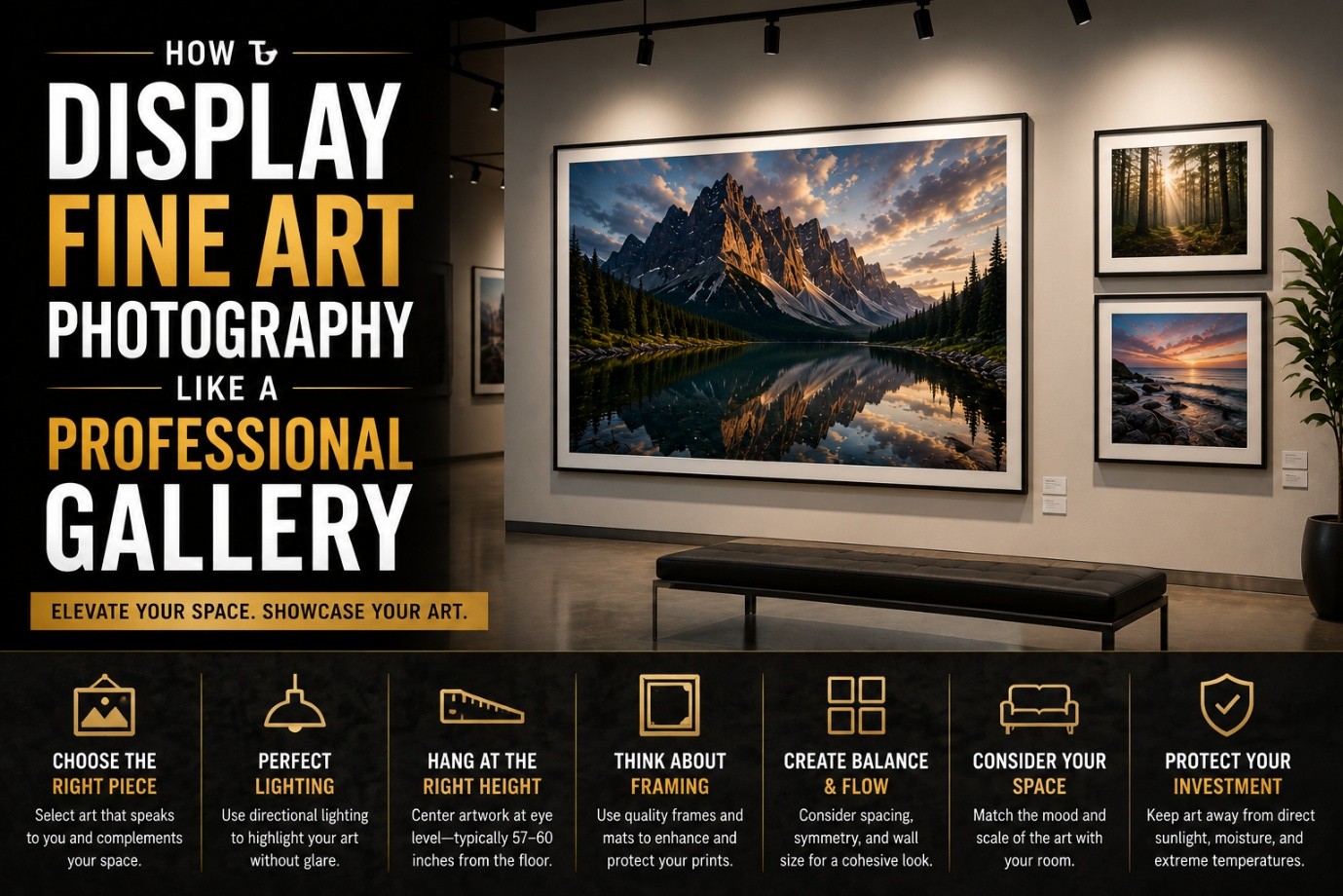
A beautiful photograph deserves more than just a spot on the wall. The right display can make every detail stand out and give the artwork the attention it deserves. Learning how to display fine art photography is not difficult when you follow a few professional techniques. Whether decorating a home, office, or commercial space, the right approach creates a polished and welcoming atmosphere.
Why the Way You Display Fine Art Photography Matters
Great photography deserves great presentation. A well-placed print draws attention, creates emotion, and adds character to a room. On the other hand, poor placement can reduce the artwork’s impact. Professional galleries carefully plan every detail, and many of those ideas work just as well in everyday spaces.
Start by Choosing the Right Space for Your Artwork
The first step is choosing the right wall. Look for a space where the artwork becomes a natural focal point. Large, open walls usually work better than busy areas filled with shelves or decorations. The viewing distance should also allow people to enjoy every detail.
Quick FAQ
What is the best wall for fine art photography?
Choose a clean wall that receives attention when someone enters the room. Avoid crowded areas so the artwork remains the main visual feature.
Understand the Best Placement Based on Room Function
Every room has a different purpose. A living room often suits large statement pieces. Bedrooms usually feel better with peaceful landscapes or calming artwork. Offices benefit from photography that creates focus and inspiration without becoming distracting.
How to Display Fine Art Photography for Maximum Visual Impact
Professional galleries focus on balance instead of filling every empty wall. When learning how to display fine art photography, think about the surrounding furniture, nearby décor, and the amount of open space. A carefully planned display feels natural and inviting.
- Keep enough space around the artwork.
- Let one main piece become the focal point.
Quick FAQ
Should every wall have artwork?
No. Space gives artwork room to stand out. A balanced display often creates a stronger visual effect than covering every wall.
Select Frames That Complement the Artwork, Not Compete With It
The frame should support the photograph instead of stealing attention. Thin black, white, or natural wood frames work well with most fine art photography. Neutral matting also keeps the focus on the image while adding a clean and refined finish.
Choose the Right Size and Scale for Every Wall
Artwork should match the size of the wall. A small print can disappear on a large wall. A very large print can overwhelm a small room. Measure the available space before selecting the final size to create better balance.
Quick FAQ
How high should artwork be hung?
Most galleries place the center of the artwork around eye level. This creates comfortable viewing for most people and keeps displays consistent.
Master Gallery Style Spacing and Layout Techniques
Spacing is just as important as the artwork itself. If you display several prints together, keep equal distance between each frame. Straight alignment creates a professional appearance. Before hanging, arrange everything on the floor to test the layout.
Use Professional Lighting to Bring Every Print to Life
Lighting changes the way photography looks. Soft LED lighting often works best because it highlights details without creating excessive heat. Avoid placing valuable prints in direct sunlight since UV rays can slowly fade colors over time.
Balance Fine Art Photography with Your Existing Interior Design
Artwork should connect with the room. Modern interiors often pair well with abstract photography. Nature images fit calm spaces, while architectural photography complements contemporary designs. Matching colors and textures creates a more unified look.
Quick FAQ
Can different photography styles work together?
Yes. They can work beautifully when they share similar colors, framing styles, or visual themes that create harmony throughout the room.
Protect Your Fine Art Photography for Long-Term Beauty
Protection keeps artwork looking its best for years. Keep prints away from moisture and excessive heat. Use archival-quality framing materials and clean the glass with a soft cloth. Handle artwork carefully whenever it needs to be moved.
Common Display Mistakes That Can Reduce the Impact of Fine Art Photography
Small mistakes can change the entire appearance. Avoid hanging artwork too high. Do not overcrowd walls. Choose frames that fit the artwork properly, and keep spacing even throughout the display. These details create a much stronger presentation.
Quick FAQ
How often should fine art photography be cleaned?
Dust frames gently every few weeks with a soft microfiber cloth. Avoid harsh cleaners that could damage the frame or protective glass.
Create a Professional Gallery Experience in Your Home or Office
Professional displays are built on thoughtful planning. Focus on balanced layouts, proper lighting, quality framing, and suitable placement. These details create an environment where every photograph becomes part of the overall design instead of feeling like an afterthought.
Explore Museum Quality Fine Art Photography for Your Space
If you are learning how to display fine art photography, begin with artwork created to museum-quality standards. Howard Harris offers carefully crafted fine art photography designed to bring lasting beauty, exceptional craftsmanship, and timeless style into homes, offices, and professional interiors.