
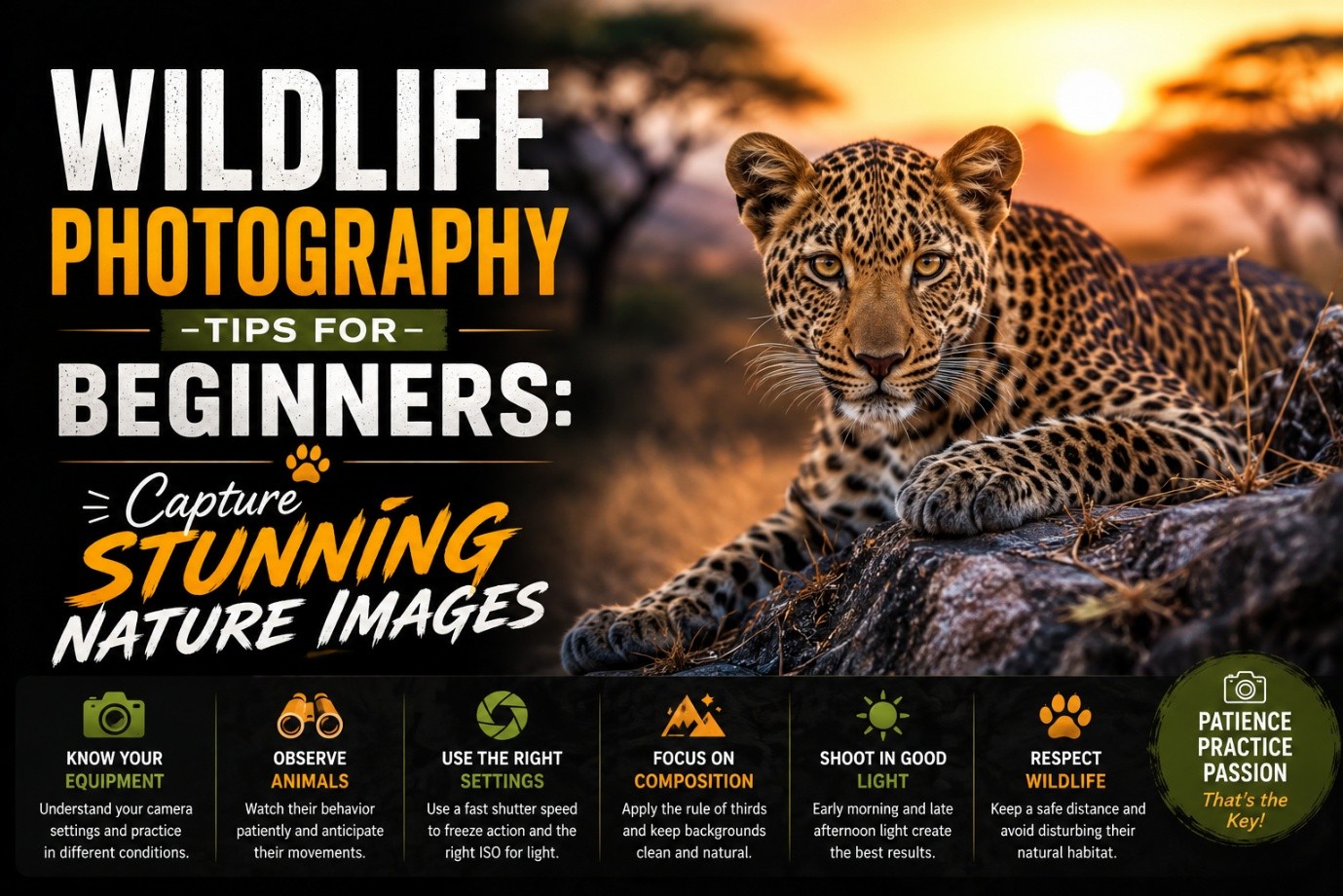
Wild animals don’t wait for perfect moments. They move fast, hide well, and react in seconds. That is what makes wildlife photography exciting and a bit challenging at the same time. With the right approach, even a beginner can capture powerful, natural moments in the wild. These wildlife photography tips for beginners can build strong foundations for better field results and sharper images.
The goal is not just to take photos, but to tell a story of nature in its raw form. Once you understand timing, patience, and light, everything starts to fall into place.
What is wildlife photography for beginners?
Wildlife photography is the art of capturing animals in their natural environment without disturbing them. For beginners, it is about learning observation before action.
You are not just clicking a camera. You are reading movement, light, and behavior. It’s more like quiet storytelling than technical shooting.
At the start, the focus should be:
- Observing animal behavior
- Understanding natural habitats
- Learning camera response time
Once these basics settle in, confidence grows quickly.
Essential gear for wildlife photography for beginners
Good gear does not guarantee great photos, but it definitely supports better results in the field.
Most beginners start with:
- DSLR or mirrorless camera
- Telephoto lens (200mm or more)
- Lightweight tripod or monopod
A long lens is important because animals are rarely close. Distance keeps both safety and natural behavior intact. One key thing many beginners forget is comfort. If gear feels too heavy or complex, focus drops fast.
Understanding animal behavior and field awareness in wildlife photography
Wildlife photography is not just technical work. It is observation mixed with patience.
Animals follow patterns:
- Feeding times
- Watering locations
- Resting zones
When you understand these patterns, chances of better shots increase. A calm mind works better in the field. Sudden movement or noise can end a shot before it even begins.
Quick FAQ
Q: Why is animal behavior important in wildlife photography?
Animal behavior helps predict movement and timing. When you understand feeding or resting patterns, you can position yourself better. This increases chances of capturing natural moments without disturbing the subject or breaking its natural rhythm.
Best camera settings for wildlife photography for beginners
Camera settings play a big role in freezing motion and capturing sharp details.
Start with:
- Fast shutter speed (1/1000 or higher)
- Continuous autofocus
- Burst shooting mode
These settings are useful when animals move suddenly. A higher ISO may be needed in low light, especially during early morning or evening shoots.
How to find and choose wildlife photography locations
Location matters as much as the camera. Good spots increase your chances of success.
Look for:
- National parks
- Wetlands
- Forest reserves
- Waterholes
Animals often gather near water sources. Early mornings usually bring the most activity. Before visiting, observe online reports or talk to local guides. That saves time and improves results.
Quick FAQ
Q: What is the best time for wildlife photography?
Early morning and late afternoon are the best times. Light is soft, and animals are more active. These periods create better contrast, natural tones, and higher chances of capturing movement in a calm environment.
Lighting tips for outdoor wildlife photography
Light can change everything in a photo. Strong sunlight often creates harsh shadows, while soft light brings natural depth. Golden hour is the best friend of wildlife photographers. It adds warmth and detail to fur, feathers, and surroundings. Avoid shooting at midday when light becomes too harsh. If that’s unavoidable, try shaded areas or adjust exposure carefully.
Composition techniques for wildlife photography for beginners
Good composition turns a normal shot into something memorable.
Keep these ideas in mind:
- Rule of thirds
- Eye-level perspective
- Natural framing using trees or grass
Animals look more powerful when photographed at their eye level. It creates a stronger connection with the viewer. Do not always center the subject. Off-center framing often feels more natural.
Patience and ethical practices in wildlife photography
Wildlife photography is not about rushing. It is about waiting for the right moment.
Respect is important:
- Do not chase animals
- Keep a safe distance
- Avoid disturbing habitats
Good photographers wait quietly. That patience often rewards better shots than constant movement.
Quick FAQ
Q: How close should I get to wild animals?
Always maintain a safe and respectful distance. Getting too close can stress animals and change their behavior. Using a telephoto lens allows capturing detailed shots without disturbing their natural environment or safety.
Common mistakes beginners make in wildlife photography
Many beginners face similar issues in the beginning stage.
Common mistakes include:
- Using too slow a shutter speed
- Not focusing on the eyes
- Ignoring background distractions
Another common issue is rushing. Wildlife photography rewards patience, not speed. Fixing these mistakes early improves results quickly.
Post-processing tips for wildlife photography for beginners
Editing is the final step that brings out detail and balance.
Focus on:
- Adjusting brightness and contrast
- Enhancing natural colors
- Cropping for better framing
Avoid over-editing. Wildlife photos should still look natural. The goal is to improve clarity, not change reality.
Step-by-step plan to improve wildlife photography skills
Progress comes with practice and structure.
Start with:
- Short practice sessions in nearby parks
- Observing animals without a camera first
- Practicing camera settings in daylight
As confidence grows, move to longer field trips. Over time, you will notice better timing, sharper focus, and improved patience.
Start Your Wildlife Photography Journey Today
Wildlife photography is not about perfection on the first try. It is about learning slowly, observing deeply, and improving step by step. Every outing teaches something new.
For those who want to grow in wildlife photography tips for beginners, consistency matters more than expensive gear. Even small improvements in timing and awareness can change results dramatically.
A professional eye and strong visual storytelling approach, like the work seen through Howard Harris Photo, show how patience and technique come together in nature photography.